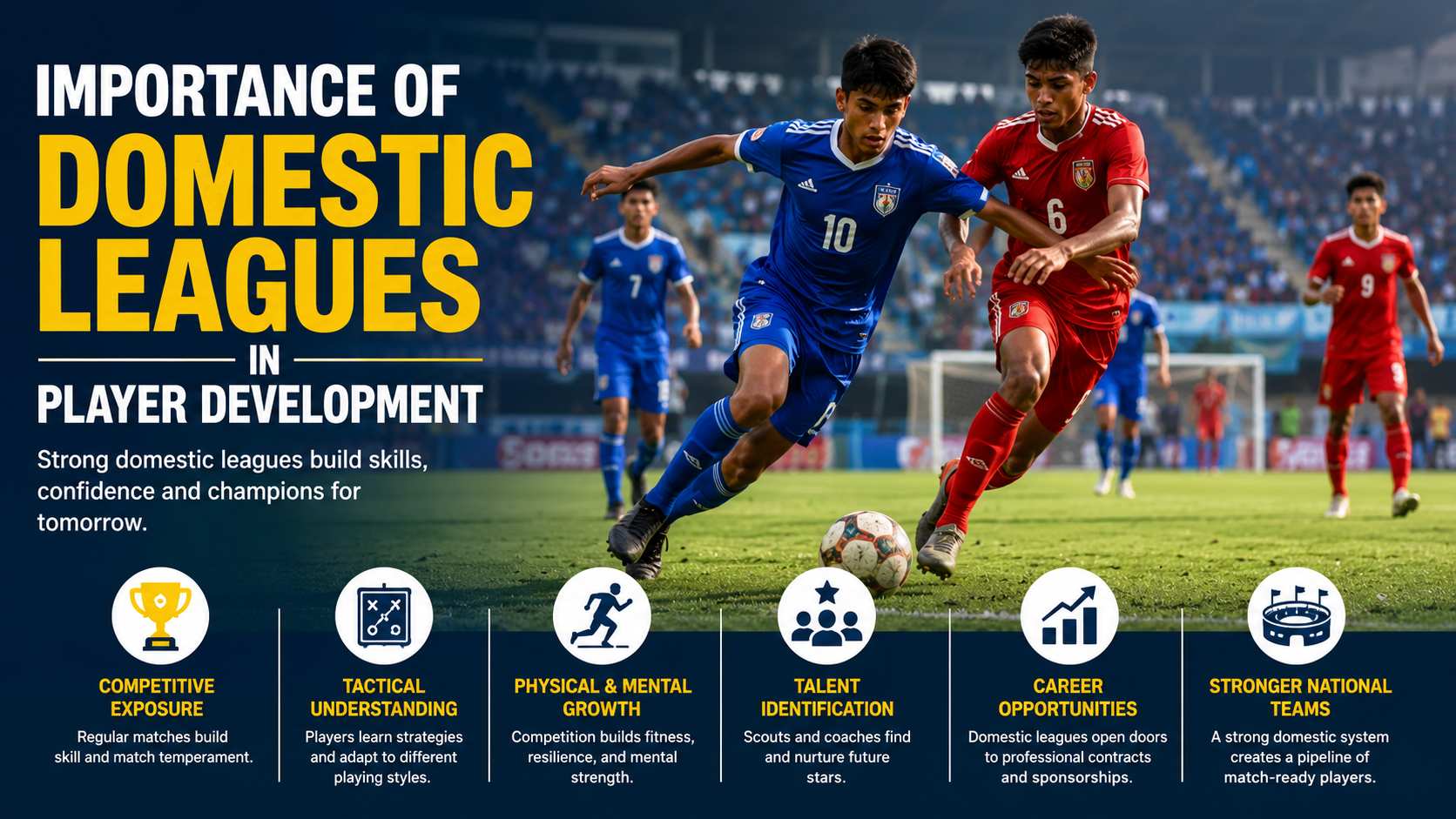
Importance of Domestic Leagues in Player Development

June 3, 2026
Importance of Domestic Leagues in Player Development
Behind every successful international athlete is a strong domestic system that helped shape their skills, confidence, and competitive mindset. While international tournaments often receive the most attention from fans and media, domestic leagues remain the true foundation of player development. They provide athletes with the opportunity to compete regularly, learn from experienced professionals, and prepare for the challenges of elite-level sports.
Across cricket, football, basketball, and many other sports, domestic competitions play a critical role in transforming promising talent into world-class performers. Without a well-structured domestic league, players often struggle to gain the experience necessary to succeed at higher levels.
Domestic Leagues Create a Competitive Environment
One of the biggest benefits of domestic leagues is the consistent competitive exposure they provide. Young players need more than training sessions to improve their abilities. They must experience real match situations where they face pressure, make quick decisions, and adapt to different opponents.
Domestic competitions allow players to test their skills regularly against athletes of varying experience levels. This continuous exposure helps improve technical ability, tactical understanding, and mental resilience. The more competitive matches a player experiences, the better prepared they become for national and international tournaments.
Bridging the Gap Between Grassroots and Professional Sports
For most athletes, the journey begins at the grassroots level. However, moving directly from youth competitions to international sports is extremely difficult. Domestic leagues serve as the bridge that connects emerging talent with professional opportunities.
A strong domestic structure creates a clear pathway:
- Grassroots Participation
- Youth Academies
- Domestic Competitions
- Professional Leagues
- National Team Selection
This pathway ensures that talented athletes continue developing at every stage of their careers. Without domestic leagues, many promising players would lack opportunities to progress beyond local competitions.
Improving Technical and Tactical Skills
Domestic leagues expose players to different playing styles, strategies, and coaching philosophies. This variety helps athletes become more complete performers.
In cricket, batters learn how to handle different bowling attacks and match situations. Football players gain experience against teams with varying tactical approaches. Regular competition challenges athletes to refine their strengths while addressing weaknesses.
Because domestic seasons often involve numerous matches, players have enough time to learn, adjust, and improve throughout the year. This long-term development process is essential for building elite-level skills.
Building Mental Strength and Professionalism
Talent alone is not enough to succeed in professional sports. Athletes must also develop mental toughness, discipline, and consistency.
Domestic leagues help players learn how to:
- Handle pressure situations
- Recover from poor performances
- Maintain focus throughout a season
- Perform in front of large crowds
- Adapt to different competitive environments
These experiences cannot be fully replicated in training. By competing regularly, players develop the confidence and professionalism required to perform at higher levels.
Creating Opportunities for Talent Identification
Domestic competitions are often the primary scouting ground for coaches and selectors. National teams rely heavily on domestic performances when identifying future stars.
A player who consistently performs well throughout a domestic season demonstrates qualities such as reliability, adaptability, and resilience. These traits are often more valuable than short-term success in a limited tournament.
Many international cricket and football stars first earned recognition through impressive domestic performances before receiving opportunities at the national level.
For additional insights into athlete development systems, readers can explore resources from the International Cricket Council (ICC) and FIFA’s player development programs, both of which emphasize the importance of structured domestic competitions in nurturing talent.
Financial Support Encourages Long-Term Development
Financial stability is another important advantage of domestic leagues. Many talented athletes struggle to continue their sporting careers because of limited earning opportunities.
Professional domestic competitions provide contracts, match fees, sponsorship opportunities, and other forms of financial support. This allows players to focus more on training and performance rather than worrying about financial challenges.
When athletes have access to stable income and professional support systems, they are more likely to remain committed to long-term development and reach their full potential.
Strengthening National Teams
Strong domestic leagues directly contribute to stronger national teams. Countries that consistently perform well internationally usually have highly competitive domestic structures.
Domestic competitions ensure that national selectors have access to a large pool of match-ready players. Healthy competition for national team places encourages athletes to maintain high performance standards.
Rather than depending on a few exceptional individuals, successful sporting nations create systems that continuously develop new talent through their domestic leagues.
Encouraging Youth Participation
Domestic leagues also inspire future generations of athletes. Young fans who watch local players succeed are more likely to participate in sports themselves.
This increased participation expands the talent pool and strengthens grassroots programs. Over time, domestic leagues help create a sustainable cycle of growth that benefits the entire sporting ecosystem.
As participation increases, clubs, academies, and governing bodies gain greater opportunities to identify and develop emerging talent.
Driving Investment in Sports Infrastructure
The growth of domestic leagues often leads to investment in facilities, coaching programs, sports science departments, and player welfare initiatives.
Improved infrastructure benefits athletes at every level, from beginners to professionals. Better training environments, modern equipment, and qualified coaches all contribute to faster and more effective player development.
As leagues become more professional, the overall standard of the sport continues to improve.
Final Thoughts
The importance of domestic leagues in player development cannot be overstated. They provide competitive exposure, create professional pathways, improve technical and mental skills, and help identify future stars. Domestic competitions also offer financial stability, encourage youth participation, and strengthen national teams.
While international tournaments showcase the best talent, domestic leagues are where that talent is developed. Countries that invest in strong domestic structures create sustainable systems capable of producing successful athletes for generations. For any sport aiming for long-term growth and international success, a thriving domestic league remains one of the most valuable investments.
FAQs
Why are domestic leagues important for player development?
Domestic leagues provide regular competitive matches, professional coaching, and valuable experience that help athletes improve their skills and prepare for higher levels of competition.
How do domestic leagues help national teams?
They create a talent pipeline by developing players who can eventually represent their countries in international tournaments.
What skills do players develop through domestic competitions?
Players improve technical abilities, tactical awareness, decision-making, consistency, confidence, and mental resilience.
Can domestic leagues increase youth participation in sports?
Yes. Successful domestic leagues inspire young athletes to join grassroots programs and pursue professional sporting careers.
How do domestic leagues support athletes financially?
They provide contracts, match fees, sponsorship opportunities, and professional support systems that allow players to focus on their development.