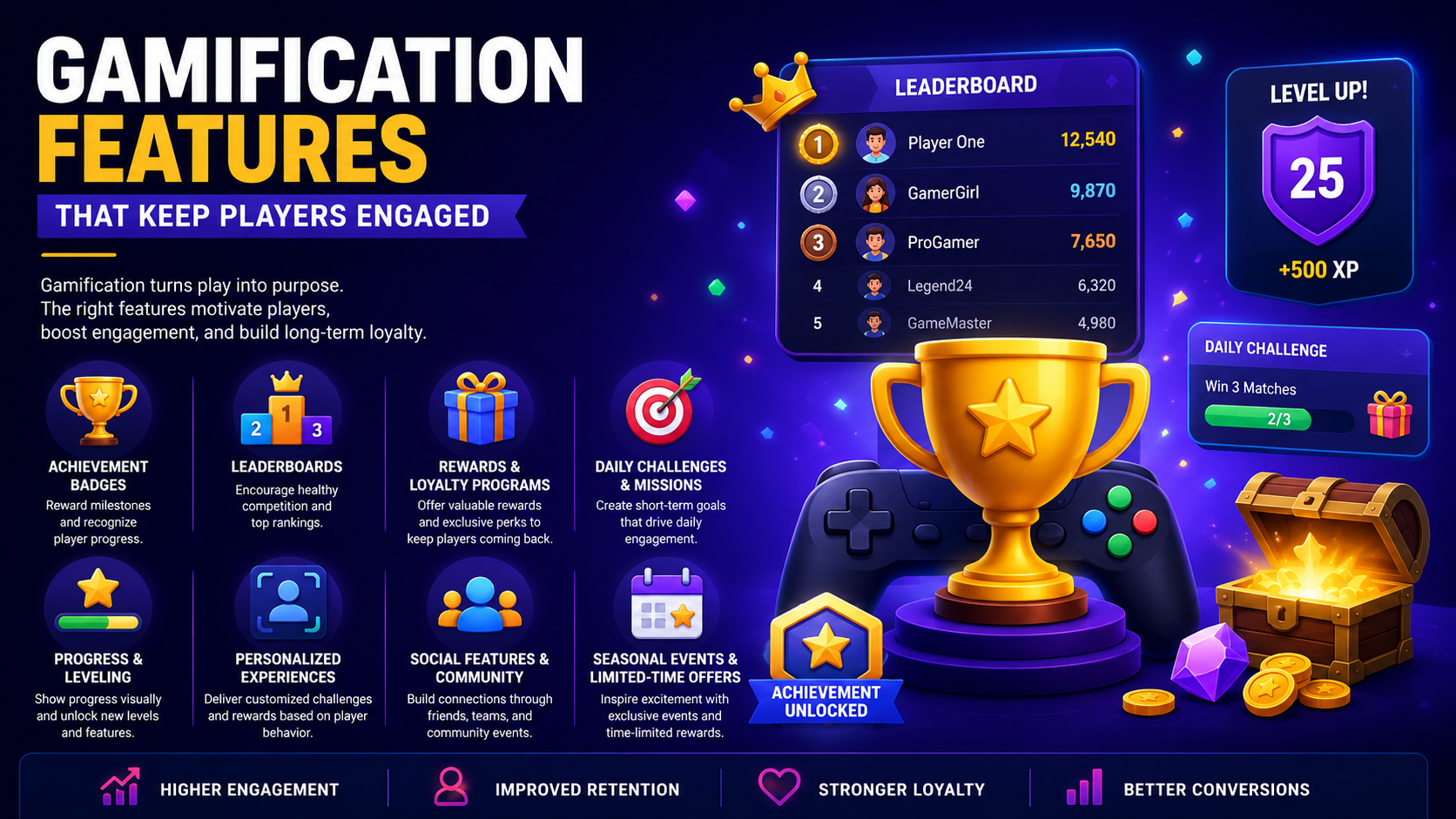
Gamification Features That Keep Players Engaged

June 2, 2026
Gamification Features That Keep Players Engaged
In today’s highly competitive online gaming landscape, attracting players is only half the challenge. The real success lies in keeping them engaged over the long term. With countless gaming platforms competing for attention, operators are increasingly turning to gamification to enhance user experiences and encourage consistent participation.
Gamification is the process of applying game-like mechanics and rewards to non-game environments. When implemented effectively, it creates excitement, motivates players, and strengthens loyalty. From achievement badges and leaderboards to loyalty programs and personalized challenges, gamification has become one of the most effective strategies for improving player engagement and retention.
What Is Gamification in Gaming Platforms?
Gamification refers to integrating interactive elements that make the player experience more enjoyable and rewarding. These features tap into psychological motivators such as competition, achievement, progress, and recognition.
Rather than relying solely on gameplay, modern platforms use gamification techniques to encourage users to return regularly, complete challenges, and engage with various platform features. According to research from the Optimove gamification guide, personalized rewards and achievement-based systems significantly increase user retention and participation rates.
Why Gamification Matters for Player Engagement
Players today expect more than just entertainment. They seek progression, rewards, and meaningful interactions. Gamification addresses these expectations by creating a sense of accomplishment and continuous motivation.
Key benefits include:
- Increased player retention
- Higher session frequency
- Improved user satisfaction
- Greater brand loyalty
- Enhanced social interaction
- Increased participation in promotions and events
When players feel rewarded for their actions, they are more likely to remain active and engaged.
Top Gamification Features That Keep Players Engaged
1. Achievement Badges and Milestones
Achievement badges are among the most popular gamification tools. They recognize player accomplishments and provide visible proof of progress.
Examples include:
- Completing a certain number of games
- Reaching a specific level
- Winning consecutive matches
- Participating in special events
Badges create a sense of pride and encourage players to pursue additional goals. Even small achievements can significantly boost engagement by giving players clear objectives to work toward.
2. Leaderboards and Competitive Rankings
Humans naturally enjoy competition. Leaderboards leverage this instinct by displaying player rankings based on performance, activity, or achievements.
Leaderboards encourage players to:
- Improve their skills
- Play more frequently
- Compete with friends
- Strive for higher rankings
Platforms often introduce weekly or monthly leaderboard resets to maintain excitement and give all players a fresh opportunity to climb the rankings.
3. Loyalty and Reward Programs
Loyalty programs reward players for continued participation. These systems typically offer points, bonuses, exclusive perks, or special privileges based on activity levels.
Effective loyalty programs provide:
- Tier-based rewards
- Exclusive promotions
- VIP benefits
- Personalized offers
According to industry insights from ConversionBet’s gamification analysis, reward systems significantly increase user engagement by creating long-term incentives for active participation.
4. Daily Challenges and Missions
Daily missions provide players with short-term objectives that encourage regular platform visits.
Common examples include:
- Completing a set number of games
- Participating in tournaments
- Earning specific achievements
- Reaching score targets
Because challenges reset frequently, they create urgency and establish habits. Players are more likely to return daily to avoid missing rewards.
5. Progress Bars and Leveling Systems
Visible progress indicators are powerful psychological motivators. Progress bars help players understand how close they are to reaching the next milestone or reward.
Leveling systems create a structured journey by rewarding consistent activity. As players advance through levels, they unlock new features, bonuses, or recognition.
This constant sense of progression keeps users motivated and invested in the platform.
6. Personalized Rewards
Personalization has become a major factor in successful gamification strategies. Generic rewards often fail to generate lasting interest, while tailored experiences create stronger emotional connections.
Examples include:
- Customized challenges
- Behavior-based rewards
- Personalized bonuses
- Targeted achievement goals
Modern platforms use player data to deliver rewards that align with individual preferences and activity patterns, making engagement efforts more effective.
7. Social Features and Community Interaction
Social engagement plays a critical role in player retention. Gamification becomes more impactful when players can interact with others.
Popular social features include:
- Friend competitions
- Community challenges
- Team-based missions
- Shared achievements
- Social leaderboards
Building a sense of community encourages players to remain active while fostering stronger emotional connections to the platform.
8. Seasonal Events and Limited-Time Campaigns
Limited-time events generate excitement and urgency. These campaigns often introduce exclusive rewards, unique challenges, and temporary leaderboards.
Benefits of seasonal events include:
- Increased participation
- Higher engagement rates
- Stronger player excitement
- Opportunities for exclusive achievements
Because rewards are only available for a short period, players are more likely to participate actively before the event ends.
Best Practices for Effective Gamification
Not every gamification strategy delivers positive results. Successful implementation requires careful planning and a player-focused approach.
Consider these best practices:
- Keep challenges achievable and rewarding.
- Offer meaningful incentives.
- Personalize experiences whenever possible.
- Balance competition with accessibility.
- Continuously refresh rewards and events.
- Use player data to optimize engagement strategies.
The most successful platforms create experiences that feel natural rather than forcing gamification elements into every interaction.
The Future of Gamification
As technology evolves, gamification is becoming increasingly sophisticated. Artificial intelligence, predictive analytics, and real-time personalization are enabling platforms to create highly customized engagement experiences.
Future trends may include:
- AI-driven personalized missions
- Dynamic reward systems
- Enhanced social gaming features
- Cross-platform achievement tracking
- Immersive gamified experiences
These innovations will continue to shape how gaming platforms attract, engage, and retain players in the years ahead.
Final Thoughts
Gamification has transformed the way gaming platforms engage their audiences. Features such as achievement badges, leaderboards, loyalty programs, daily challenges, personalized rewards, and social interactions create experiences that keep players motivated and invested over time.
The most effective gamification strategies focus on delivering genuine value rather than simply offering rewards. By combining meaningful progression, competition, recognition, and personalization, platforms can build stronger relationships with players and significantly improve long-term engagement.
As player expectations continue to evolve, gamification will remain a critical tool for creating memorable, interactive, and rewarding gaming experiences.
FAQs
What is gamification in gaming platforms?
Gamification involves using game-like elements such as rewards, achievements, leaderboards, and challenges to increase player engagement and retention.
Why are leaderboards effective for player engagement?
Leaderboards encourage competition and motivate players to improve their performance, resulting in increased activity and participation.
How do loyalty programs improve player retention?
Loyalty programs reward consistent participation through points, bonuses, and exclusive benefits, encouraging players to stay active over the long term.
What are personalized rewards?
Personalized rewards are incentives tailored to individual player behavior, preferences, and activity patterns, making engagement more meaningful.
Which gamification feature is most effective?
There is no single best feature. A combination of leaderboards, achievements, loyalty programs, personalized rewards, and social engagement generally produces the strongest results.