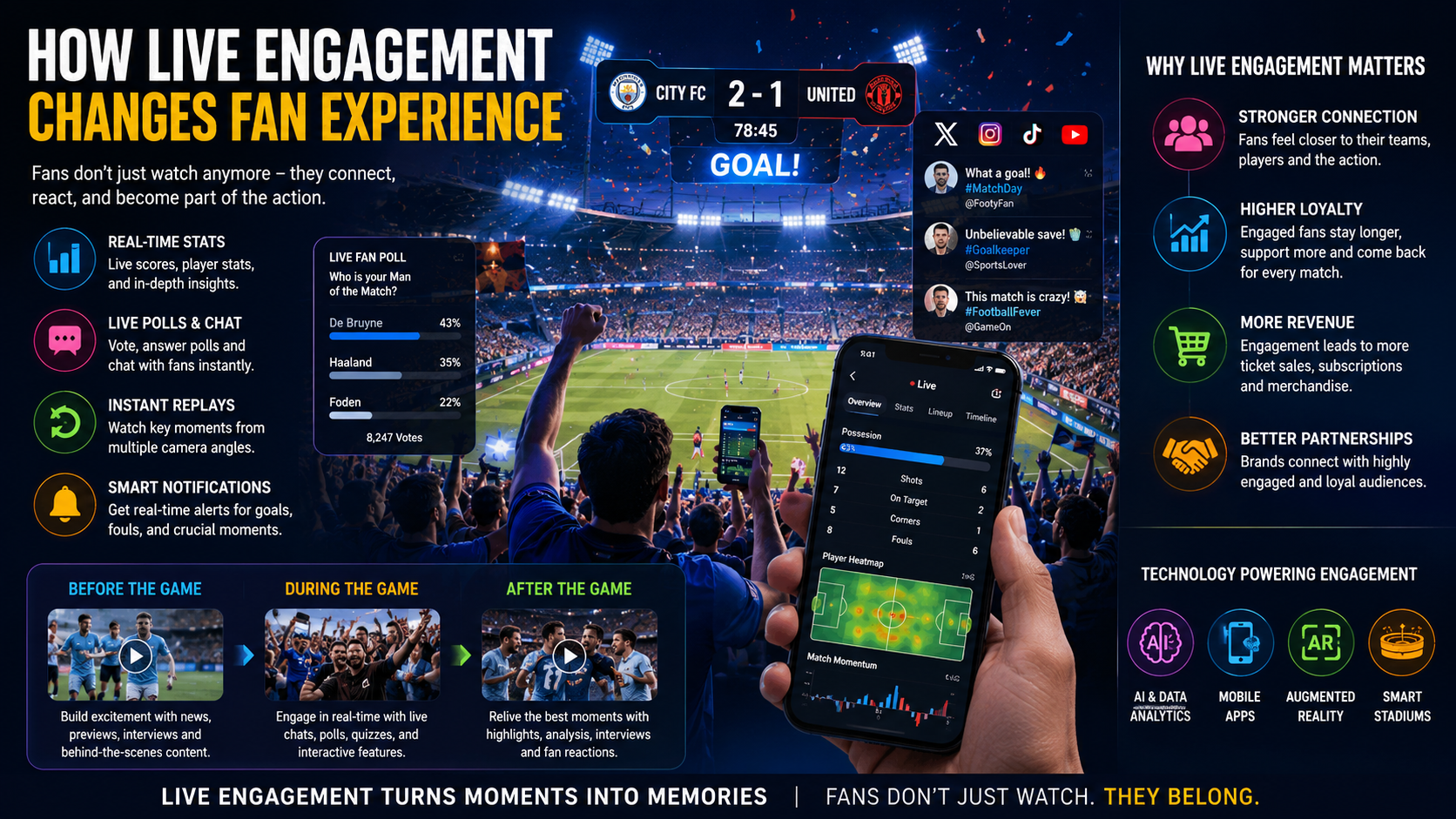
How Live Engagement Changes Fan Experience

May 22, 2026
How Live Engagement Changes Fan Experience
Sports and entertainment are no longer just about watching a match from start to finish. Today, fans want to feel connected every second — before the game starts, during live action, and even after the final whistle. Live engagement has completely changed how audiences experience sports, concerts, sports, and online events.
From live polls and social media reactions to instant replays and personalized content, modern fans expect more than passive viewing. They want interaction, excitement, and participation. This shift is transforming the relationship between teams, broadcasters, brands, and audiences across the world.
The Rise of Interactive Fan Culture
In the past, fans mostly watched games on television or listened on the radio. Communication was one-way. Now, technology allows fans to react instantly and become part of the experience.
Social media platforms, live chats, fantasy leagues, prediction games, and second-screen apps have made fan participation much stronger. Many viewers now use smartphones while watching live matches to follow stats, join discussions, or share reactions online.
This interactive culture creates a stronger emotional connection between fans and their favourite teams or players. Fans feel involved instead of simply being spectators.
For younger audiences, especially Gen Z, engagement matters as much as the game itself. They enjoy short-form highlights, behind-the-scenes content, memes, live polls, and real-time updates. Traditional viewing alone is no longer enough.
Live Engagement Makes Fans Feel Closer to the Action
One of the biggest reasons live engagement works is because it creates a feeling of closeness. Fans can now experience moments almost instantly, no matter where they are.
Modern sports apps provide live statistics, player tracking, AI-based match insights, and instant notifications during important moments. Some stadiums even use smart technologies that help fans order food, check seating, or watch replays directly from their phones.
Broadcasters are also changing how live events are presented. Features like alternative camera angles, live fan comments, interactive graphics, and real-time polls make broadcasts more engaging than traditional TV coverage.
This creates an immersive experience where fans feel emotionally connected to every play, decision, and celebration.
Social Media Has Changed Everything
Social media plays a massive role in live engagement today. Platforms like X, Instagram, TikTok, and YouTube allow fans to react instantly during live events.
A single goal, six, touchdown, or knockout moment can become viral within seconds. Fans create memes, clips, reactions, and discussions while the event is still happening. This real-time sharing keeps excitement high and extends the conversation beyond the stadium.
Teams and leagues now actively encourage this behaviour. Many clubs use live Q&A sessions, fan challenges, giveaways, and exclusive content to keep supporters engaged throughout the season.
The result is a stronger digital community where fans feel seen and valued.
Pre-Game and Post-Game Content Are Now Important
Live engagement does not start only when the game begins. Pre-game content has become a major part of the fan journey.
Fans now enjoy team analysis, player interviews, predictions, warm-up videos, and behind-the-scenes footage before matches even begin. This builds excitement and emotional investment ahead of the event. Many broadcasters have discovered that pre-game content can generate engagement levels similar to live matches themselves.
Post-game engagement is equally important. Highlights, interviews, fan reactions, podcasts, and tactical breakdowns keep conversations active long after the event ends.
Sports organizations are now creating year-round engagement instead of focusing only on match day.
Technology Is Making Stadium Experiences Smarter
Modern stadiums are becoming digital entertainment hubs instead of simple sports venues.
Large LED displays, augmented reality experiences, AI-powered services, and mobile apps are improving the in-stadium experience for fans. Smart stadium technology allows audiences to access live stats, instant replays, interactive games, and personalized services during events.
Some venues even use crowd analytics and AI systems to understand fan behavior and improve future experiences. This helps organizers create better entertainment, shorter wait times, and more personalized interactions.
The goal is simple: make every fan feel connected, entertained, and involved throughout the event.
Personalization Is the Future of Fan Engagement
Fans no longer want generic experiences. They expect content that matches their interests.
AI and data analytics are helping sports organizations personalize recommendations, notifications, and digital experiences. Fans can receive updates about favourite players, customized highlights, or exclusive content based on their behaviour and preferences.
This level of personalization increases fan loyalty because audiences feel understood and valued.
Real-time engagement strategies are also becoming smarter. Teams now use live polls, quizzes, micro-rewards, and interactive features during events to keep fans active and emotionally connected.
Live Engagement Creates Business Opportunities
Better fan engagement also creates major financial benefits for sports organizations and broadcasters.
Engaged fans are more likely to buy tickets, subscribe to streaming services, purchase merchandise, and attend future events. Studies show that improved digital experiences can increase fan spending and long-term loyalty.
Brands also benefit because engaged audiences spend more time interacting with content and advertisements. This creates stronger partnerships between teams, sponsors, and media companies.
As competition for audience attention grows, live engagement is becoming one of the most important strategies in the entertainment industry.
Challenges of Live Engagement
Although live engagement offers many advantages, it also comes with challenges.
Too much digital activity can sometimes distract fans from the actual event. Some people feel that constant phone usage reduces the traditional atmosphere of live sports.
Privacy and data security are also becoming important concerns because many engagement systems collect user information to personalize experiences.
Sports organizations must balance innovation with authenticity. Fans want interaction, but they also want genuine emotional experiences.
Final Thoughts
Live engagement has completely transformed the modern fan experience. Sports and entertainment are no longer passive activities where audiences simply watch from a distance. Fans now want interaction, personalization, community, and real-time involvement.
Technology, social media, AI, and smart broadcasting are helping fans feel closer to the action than ever before. Whether someone is inside a stadium or watching from home, live engagement creates stronger emotional connections and more memorable experiences.
As digital innovation continues to grow, the future of fan engagement will become even more interactive, immersive, and personalized. The fans of today do not just want to watch the game — they want to be part of it.
FAQs
What is live engagement in sports?
Live engagement refers to real-time interaction between fans and sports content through apps, social media, live polls, chats, statistics, and digital experiences during events.
Why is fan engagement important?
Fan engagement helps teams and broadcasters build stronger emotional connections with audiences, increase loyalty, and improve overall entertainment value.
How does social media improve fan experience?
Social media allows fans to share reactions, join discussions, watch highlights, and interact with teams instantly during live events.
What are smart stadiums?
Smart stadiums use advanced technology like mobile apps, AI systems, digital displays, and interactive services to improve fan experiences inside venues.
How is AI changing fan engagement? AI helps personalize content, provide real-time insights, recommend highlights, and create interactive experiences tailored to individual fans.