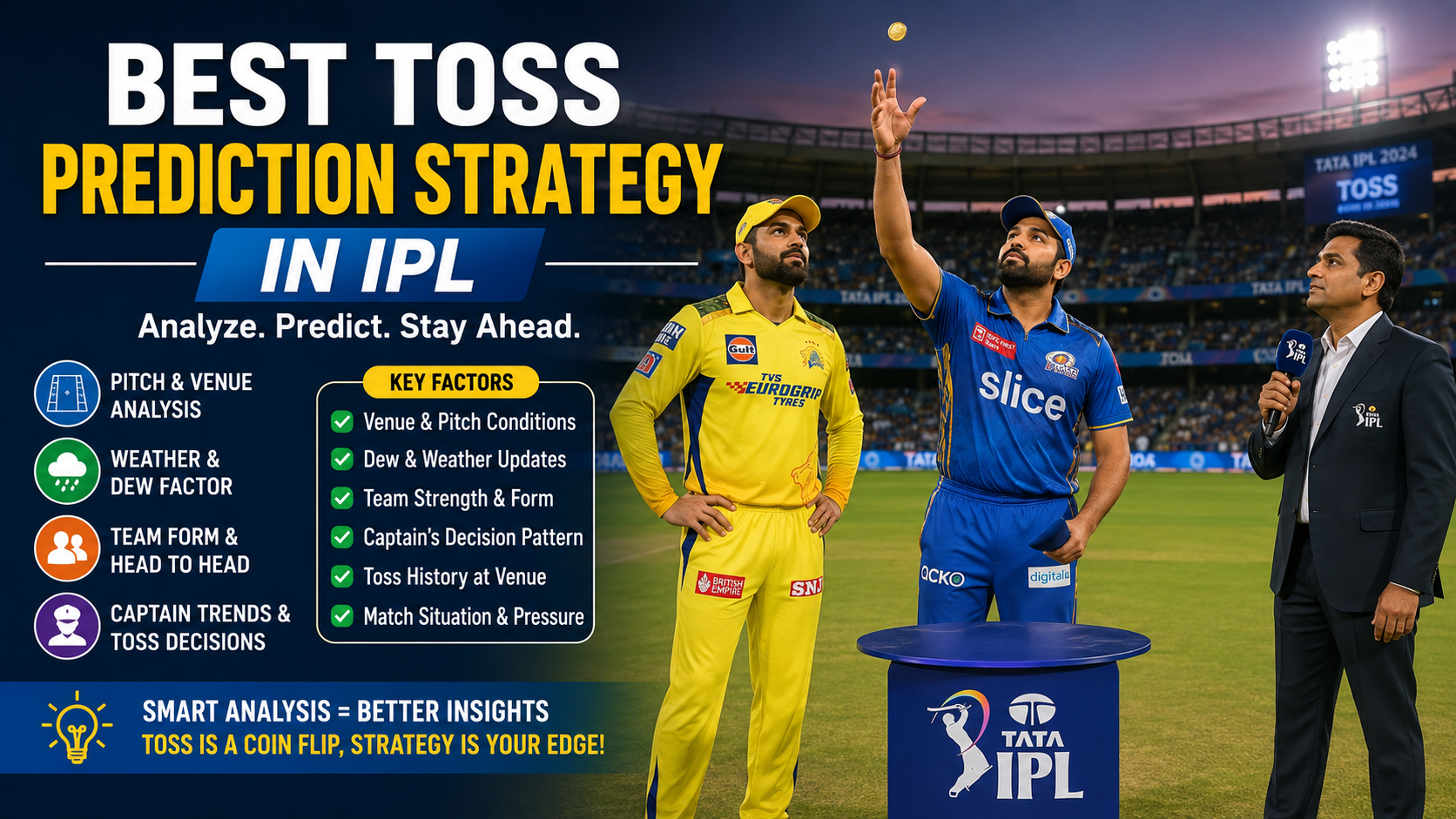
Best Toss Prediction Strategy in IPL

May 27, 2026
Best Toss Prediction Strategy in IPL
The Indian Premier League (IPL) is one of the most exciting cricket tournaments in the world. Every match brings intense competition, unpredictable moments, and strategic decisions. Among all these factors, the toss plays a major role in deciding how the game may unfold. Many cricket fans and analysts closely study toss trends because winning the toss can provide a slight advantage depending on the pitch, weather, and team strengths.
Understanding the best toss prediction strategy in IPL is not about luck alone. It involves analyzing data, team behavior, venue conditions, and match situations. In this article, we will explore how toss prediction works, what factors influence it, and how you can improve your understanding of toss-based strategies in IPL matches.
Why the Toss Matters in IPL
In T20 cricket, conditions can change very quickly. A team winning the toss gets the first opportunity to decide whether to bat or bowl. This decision can influence the entire match.
For example:
- On pitches where dew appears in the second innings, teams often prefer chasing.
- Slow pitches may become harder for batting later in the game.
- Some grounds naturally favor teams batting first because scoreboard pressure becomes important.
Because IPL matches are fast-paced, even a small advantage from the toss can affect momentum and match strategy.
Key Factors Used in Toss Prediction Strategy
1. Venue and Pitch Conditions
Every IPL stadium behaves differently. Some pitches support batsmen, while others help bowlers. Understanding venue history is one of the most important parts of toss prediction.
For instance:
- Wankhede Stadium usually supports chasing because of dew.
- Chennai pitches often become slower in the second innings.
- Kolkata surfaces may assist spin bowlers later in the match.
Teams study these conditions carefully before making their toss decision.
2. Dew Factor
The dew factor is extremely important in night matches. When dew settles on the field, bowlers struggle to grip the ball properly. This makes batting easier during the second innings.
Because of this:
- Teams often choose to bowl first in night matches.
- Captains prefer chasing targets under heavy dew conditions.
Monitoring weather reports and humidity levels can help in understanding likely toss decisions.
3. Team Strengths and Playing Style
Different IPL teams have different strengths. Some teams are stronger while chasing, whereas others perform better while defending totals.
For example:
- Teams with aggressive finishers usually prefer chasing.
- Teams with strong spin attacks may choose to bat first on turning pitches.
Analyzing previous matches helps identify a team’s preferred approach after winning the toss.
4. Captain’s Decision-Making Pattern
Experienced captains often follow similar strategies at particular venues. Studying captain behavior can provide useful insights.
A captain may consistently:
- Choose bowling first at dew-heavy venues
- Prefer batting first in knockout matches
- Trust defending totals on slow pitches
Patterns from previous IPL seasons can reveal these tendencies.
5. Weather Conditions
Weather directly impacts pitch behavior. Cloud cover, humidity, temperature, and rain possibilities can all affect toss decisions.
Important weather factors include:
- Humid weather increases dew chances
- Overcast conditions help swing bowlers
- Dry weather supports spinners
Checking weather forecasts before the match can improve toss analysis.
How Data Analysis Improves Toss Prediction
Modern cricket relies heavily on statistics and match data. Analysts examine:
- Win percentage after winning the toss
- Venue-specific trends
- Batting-first vs chasing records
- Team performance under different conditions
For example, if a stadium shows a high chasing success rate, teams are more likely to bowl first after winning the toss.
Historical IPL data helps identify patterns, although toss outcomes themselves remain random.
Common Toss Prediction Myths
Many people believe there are guaranteed formulas for predicting toss outcomes. However, the toss itself is purely based on chance. No strategy can accurately predict which captain will win every toss.
What can be analyzed is:
- What the captain is likely to choose after winning
- How toss decisions impact match results
- Venue and weather trends
The smartest approach is focusing on decision analysis rather than trying to predict the coin flip itself.
Best Practical Toss Prediction Strategy
Here are some practical strategies cricket followers use:
Study Venue Records
Always check:
- Average first innings score
- Chasing success rate
- Pitch behavior in recent matches
This provides a strong foundation for understanding toss importance.
Analyze Team Combinations
Look at:
- Batting depth
- Bowling strength
- Spin vs pace balance
A team’s squad often indicates whether they prefer batting or chasing.
Monitor Toss Decisions in Similar Conditions
If multiple matches at the same venue show captains choosing to bowl first, there is a strong chance future captains may follow the same strategy.
Follow Weather Updates
Weather can completely change match planning. Dew-heavy conditions often influence captains toward chasing.
Understand Match Pressure
In playoff or knockout games, teams sometimes prefer batting first because scoreboard pressure becomes valuable in high-pressure situations.
Does Winning the Toss Guarantee Victory?
No, winning the toss does not guarantee success. While it can provide an advantage, match performance remains the biggest factor.
Many IPL matches have been won despite losing the toss because:
- Players performed exceptionally well
- Bowlers defended low totals
- Batting collapses changed the game
The toss only creates an opportunity. Execution on the field matters far more.
FAQs
Is toss prediction completely based on luck?
Yes, the actual coin toss is purely random. However, analyzing pitch conditions, weather, and team behavior helps predict what decision a captain may take after winning the toss.
Why do teams prefer chasing in IPL?
Teams often prefer chasing because dew makes batting easier in the second innings. Chasing also gives clarity about the required run rate.
Which factor affects toss decisions the most?
Pitch conditions and dew are usually the biggest factors influencing toss decisions in IPL matches.
Can historical data help in toss strategy?
Yes, historical venue records and team patterns help understand likely match strategies and captain decisions.
Does the toss matter more in night matches?
Yes, especially in venues where dew becomes a major factor during the second innings.
Final Thoughts
The best toss prediction strategy in IPL is built on research, observation, and understanding match conditions. While nobody can predict the toss result with certainty, analyzing venue trends, weather reports, team strengths, and captain behavior can provide valuable insights into likely match strategies.
In modern IPL cricket, the toss has become an important tactical element rather than just a simple coin flip. Teams carefully plan their decisions based on conditions, and smart analysis helps cricket followers better understand how these decisions shape the game.
Ultimately, successful IPL analysis comes from combining cricket knowledge with statistical trends. The toss may provide an advantage, but skill, execution, and match temperament remain the true deciding factors in cricket.