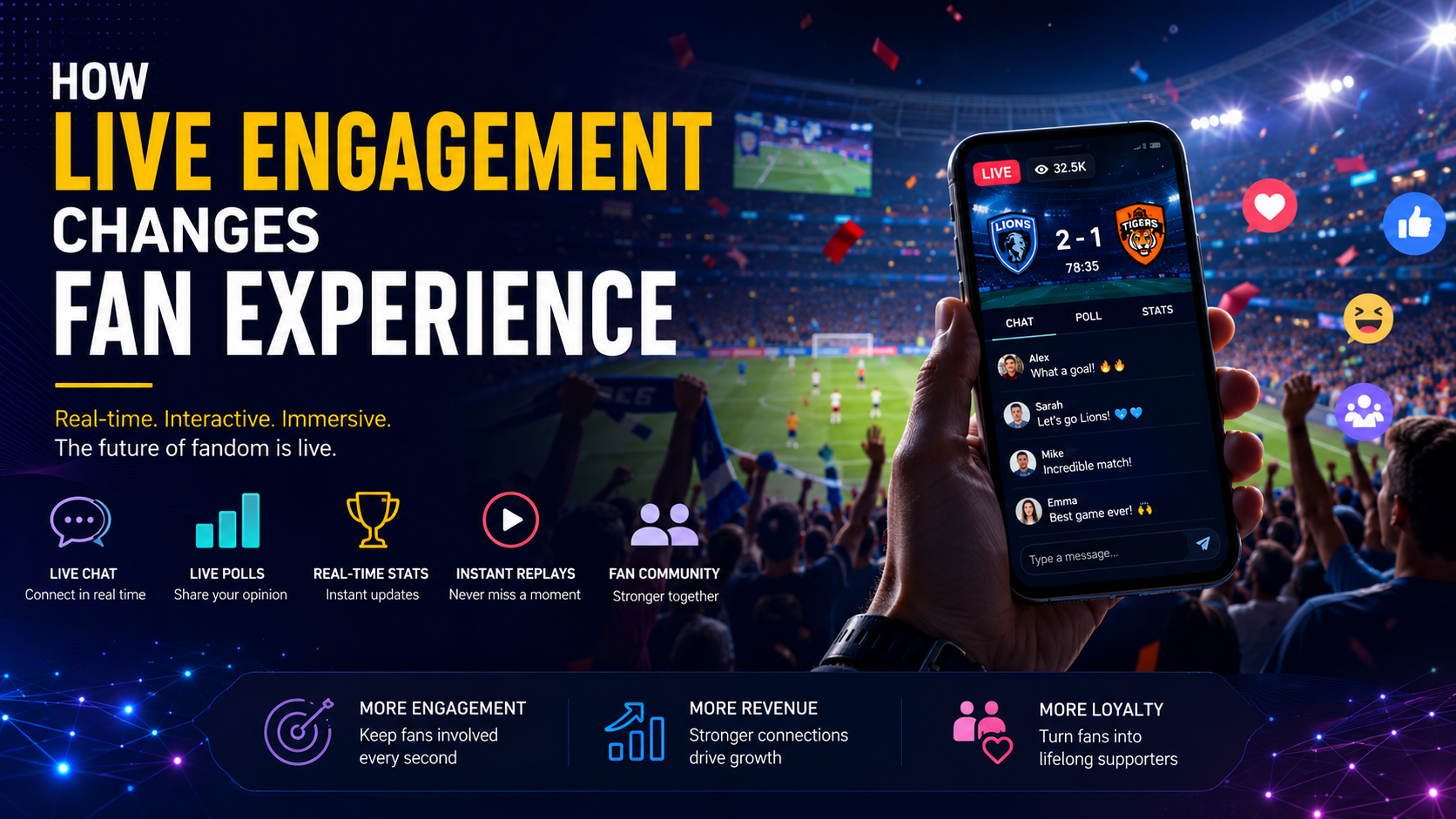
How Live Engagement Impacts Sports and Entertainment

May 21, 2026
How Live Engagement Impacts Sports and Entertainment
Live engagement is especially powerful in sports and entertainment because these industries rely on emotion, timing, and shared experiences.
Fans can now:
- Vote for “Player of the Match” during the game
- Predict outcomes while events are ongoing
- React instantly on social media
- Join global conversations in real time
This creates a shared emotional experience across millions of users simultaneously.
It also changes how events are produced—organizers now design experiences around interaction, not just viewing.
Business Impact of Live Engagement
Live engagement is not just improving experience—it is also driving massive business growth.
According to PwC research, fan experience directly impacts revenue generation across multiple channels such as subscriptions, ticket sales, and merchandising. Better engagement leads to stronger financial outcomes.
PwC – Fan Experience and Revenue Insights
Key business benefits include:
- Higher user retention rates
- Increased subscription revenue
- Better advertising opportunities
- Stronger brand loyalty
- More merchandise sales
Engaged fans are more likely to spend time and money, making live engagement a core business strategy rather than just a feature.
Why Fans Love Live Engagement
The success of live engagement is rooted in psychology. Fans enjoy being part of the action rather than just watching it.
Key reasons include:
- Real-time emotional connection
- Sense of community with other fans
- Ability to influence or react instantly
- Personalized experience
- More immersive storytelling
This makes the experience feel alive and dynamic rather than static.
Challenges in Live Engagement Systems
Even though live engagement is powerful, it comes with challenges that companies must solve.
1. Scalability Issues
Millions of users interacting at once require strong infrastructure.
2. Latency Problems
Even a few seconds of delay can break the real-time experience.
3. Content Moderation
Live chats and interactions must be monitored to prevent spam or harmful content.
4. Data Privacy
User interaction data must be collected and stored responsibly.
5. Over-Engagement
Too many notifications or interactions can overwhelm users if not balanced properly.
Future of Live Fan Experience
The future of fan engagement is moving toward deeper immersion and personalization.
Upcoming trends include:
- AR-powered live stats overlays
- VR-based virtual stadiums
- AI-generated real-time commentary
- Fully interactive global fan communities
- Hyper-personalized viewing experiences
As technology evolves, the gap between physical and digital experiences will continue to shrink.
Fans will not just watch events—they will live inside them digitally.
Final Thought
Live engagement has fundamentally changed fan experience by turning passive viewers into active participants. It has transformed entertainment into a real-time, interactive, and emotionally connected ecosystem.
With technologies like AI, real-time data systems, and interactive streaming platforms, fan engagement is becoming more personalized and immersive than ever before.
Brands and platforms that invest in live engagement are not just improving user experience—they are building the future of digital entertainment where every moment matters and every fan is part of the action.
FAQs
1. What is live engagement in fan experience?
Live engagement is real-time interaction between fans and ongoing events through digital platforms like apps, streaming services, and social media.
2. How does live engagement improve fan experience?
It makes events more interactive, emotional, and immersive by allowing fans to participate during live moments.
3. What technologies are used in live engagement?
AI, real-time messaging systems, interactive streaming platforms, and sensor-based analytics are commonly used.
4. How does live engagement benefit businesses?
It increases revenue, improves retention, boosts engagement, and strengthens brand loyalty.
5. Why is real-time interaction important?
Because it creates instant emotional connection and makes fans feel directly involved in the event.
6. What is the future of fan engagement?
The future includes AR/VR experiences, AI-driven personalization, and fully interactive live digital environments.